Conversion to Battery Power

With the ever-growing pursuit of sustainability, the power tool industry is increasingly transitioning from AC powered, gas-powered, or pneumatic tools to battery-powered tools. This shift has numerous benefits, but it also requires a new understanding of handling and maintenance. It is crucial for operators to recognize these battery-powered tools many times require different safety protocols compared to their gas-powered counterparts.
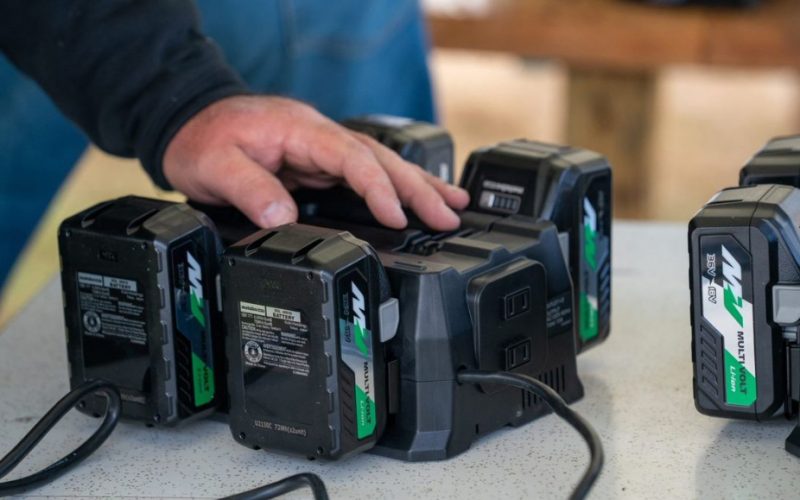
Battery charger charging 4 batteries.

The following tips are to help educate on some of the benefits and the necessary precautions when adopting a battery-powered power tool and lawn equipment fleet.

Operator Benefits:

Reduced Exhaust Emissions

Battery-powered tools produce zero combustive emissions, which may allow them to be used indoors.

Lower Noise Levels

Battery-powered tools are generally quieter than their gas-powered counterparts, which may allow their use in areas with noise ordinances or other noise restrictions.

On-going Monitoring

Most battery-powered tools have advanced battery management systems that can provide accurate tool and battery monitoring and alerts, helping ensure tools are ready for use.

Portability and Reduces Trip Hazards

Reduces number of potential trip hazards from cords and hoses; allows for use and without the need to unplug and find a power source.

Safety Precautions for Battery-Powered Tools

Proper Charging Practices
  • Use only batteries and chargers recommended by the tool manufacturer to avoid overcharging and overheating. Using knock-off or aftermarket batteries and/or chargers can lead to battery fires or explosions. 
  • Charge batteries as directed in the operator’s manual in well-ventilated areas that are protected from the elements and away from flammable materials.
  • Review all product labels, warnings, and manuals for proper usage.
Battery & Tool Handling and Storage
  • Follow the manufacturer’s instructions for storage. Store batteries in a dry, cool place, away from direct sunlight and moisture, to prevent degradation and potential hazards. This may mean not storing batteries or battery-powered tools on open trailers or other areas where they may be exposed to the elements.
  • Avoid exposing batteries to extreme temperatures, as both heat and cold can impact performance and safety.
  • Avoid storing battery packs in a container with other metal objects such as nails, coins, etc.
  • Do not touch the battery terminals with any conductive material.
Inspection and Maintenance
  • Always remove the battery pack from the equipment before performing maintenance or making adjustments to prevent an inadvertent powerup that could cause injury.
  • Clean off dirt, grass, and other debris after each use. Avoid using a water hose or pressure washer; instead, use a soft, dry cloth or brush to clean the equipment.
  • When switching to cordless tools, remember that unlike metal, gas-powered equipment, these tools often contain plastic components that can degrade when cleaned with harsh chemicals. Use only recommended cleaning agents to avoid damage.
  • Regularly inspect batteries for signs of damage, such as cracks, swelling, or leaks. Damaged batteries should be disposed of properly and not used.
  • Clean battery contacts and terminals to ensure proper connection and prevent short circuits.
  • Do not disassemble or tamper with the battery packs.
  • Lubricate mechanical parts as recommended. While the lack of combustion engine reduces most maintenance, parts like chains on chainsaws still need regular lubrication.
Emergency Preparedness
  • Develop and communicate emergency procedures for battery-related incidents, ensuring all workers know how to respond effectively.
  • Equip job sites with firefighting materials suitable for both electrical and battery fires and train workers on their use.
Proper Disposal/Recycling
  • Recycle your portable rechargeable batteries to conserve natural resources, prevent rechargeable batteries from entering the solid waste stream and ultimately, to preserve our environment. Improper disposal can cause potential fire hazards at waste handling facilities and landfills and contaminate water supplies.
  • Make sure you follow state, local, and federal regulations, as these batteries cannot be disposed of with regular/curbside recycling or trash.
  • Many major retailers in U.S. and Canada have battery recycling collection boxes. For the sites nearest you, visit https://batterynetwork.org/locator/ or call the consumer helpline at 1-877-723-1297.

Converting to Battery Power

The transition from AC-powered, gas-powered or pneumatic tools to battery-powered power tools is a pivotal step towards the future of the power tool industry. While there are numerous benefits to battery-powered tools in certain applications, including lower exhaust emissions and decreased noise levels which makes battery-powered tools a strong choice, it is essential to adopt new safety practices for this growing technology. Educating consumers on these practices ensures the safe and efficient use of battery-powered tools, maximizing their potential while safeguarding the DIYers and the workforce. For a full list of safety instructions, please consult the instruction manual for the manufacturer’s tool or battery that you are using/operating.

Disclaimer: This document is provided by Power Tool Institute (“PTI”) for informational purposes only. Any inaccuracy or omission is not the responsibility of PTI. PTI does not make any representations or warranties with respect to this document or its contents. PTI hereby disclaims all warranties of any nature, express, implied or otherwise, or arising from trade or custom, including, without limitation, any implied warranties of merchantability, noninfringement, quality, title, fitness for a particular purpose, completeness or accuracy. To the fullest extent permitted by applicable laws, PTI shall not be liable for any losses, expenses or damages of any nature, including, without limitation, special, incidental, punitive, direct, indirect or consequential damages or lost income or profits, resulting from or arising out of a company’s or individual’s use of this document, whether arising in tort, contract, statute, or otherwise, even if advised of the possibility of such damages.

Previous Topic

Power Tool Accessories

Explore our tips for choosing safe, appropriate accessories for your power tools.

Next Topic

Tool Tethering

Tool tethers, also referred to as lanyards, help reduce the risks associated with dropping tools being used at height.