
With the ever-growing pursuit of sustainability, the power tool industry is increasingly transitioning from AC powered, gas-powered, or pneumatic tools to battery-powered tools. This shift has numerous benefits, but it also requires a new understanding of handling and maintenance. It is crucial for operators to recognize these battery-powered tools many times require different safety protocols compared to their gas-powered counterparts.
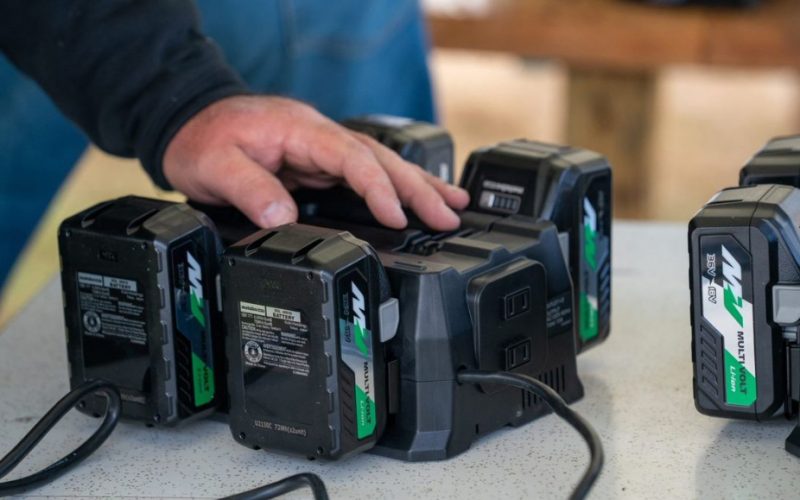
The following tips are to help educate on some of the benefits and the necessary precautions when adopting a battery-powered power tool and lawn equipment fleet.
Reduced Exhaust Emissions
Battery-powered tools produce zero combustive emissions, which may allow them to be used indoors.
Lower Noise Levels
Battery-powered tools are generally quieter than their gas-powered counterparts, which may allow their use in areas with noise ordinances or other noise restrictions.
On-going Monitoring
Most battery-powered tools have advanced battery management systems that can provide accurate tool and battery monitoring and alerts, helping ensure tools are ready for use.
Portability and Reduces Trip Hazards
Reduces number of potential trip hazards from cords and hoses; allows for use and without the need to unplug and find a power source.
The transition from AC-powered, gas-powered or pneumatic tools to battery-powered power tools is a pivotal step towards the future of the power tool industry. While there are numerous benefits to battery-powered tools in certain applications, including lower exhaust emissions and decreased noise levels which makes battery-powered tools a strong choice, it is essential to adopt new safety practices for this growing technology. Educating consumers on these practices ensures the safe and efficient use of battery-powered tools, maximizing their potential while safeguarding the DIYers and the workforce. For a full list of safety instructions, please consult the instruction manual for the manufacturer’s tool or battery that you are using/operating.
Disclaimer: This document is provided by Power Tool Institute (“PTI”) for informational purposes only. Any inaccuracy or omission is not the responsibility of PTI. PTI does not make any representations or warranties with respect to this document or its contents. PTI hereby disclaims all warranties of any nature, express, implied or otherwise, or arising from trade or custom, including, without limitation, any implied warranties of merchantability, noninfringement, quality, title, fitness for a particular purpose, completeness or accuracy. To the fullest extent permitted by applicable laws, PTI shall not be liable for any losses, expenses or damages of any nature, including, without limitation, special, incidental, punitive, direct, indirect or consequential damages or lost income or profits, resulting from or arising out of a company’s or individual’s use of this document, whether arising in tort, contract, statute, or otherwise, even if advised of the possibility of such damages.
Previous Topic

Next Topic